Capacitors (10nF, 100nF, 100µF) – Passive Component
Overview
A capacitor is a passive component that stores electrical energy in an electric field.
It is widely used for:
- Filtering noise
- Stabilizing voltage
- Timing circuits
- Energy buffering
In this course it is used to:
- Decouple power supply (noise filtering)
- Smooth signals
- Work with RC circuits
- Stabilize analog readings
Image
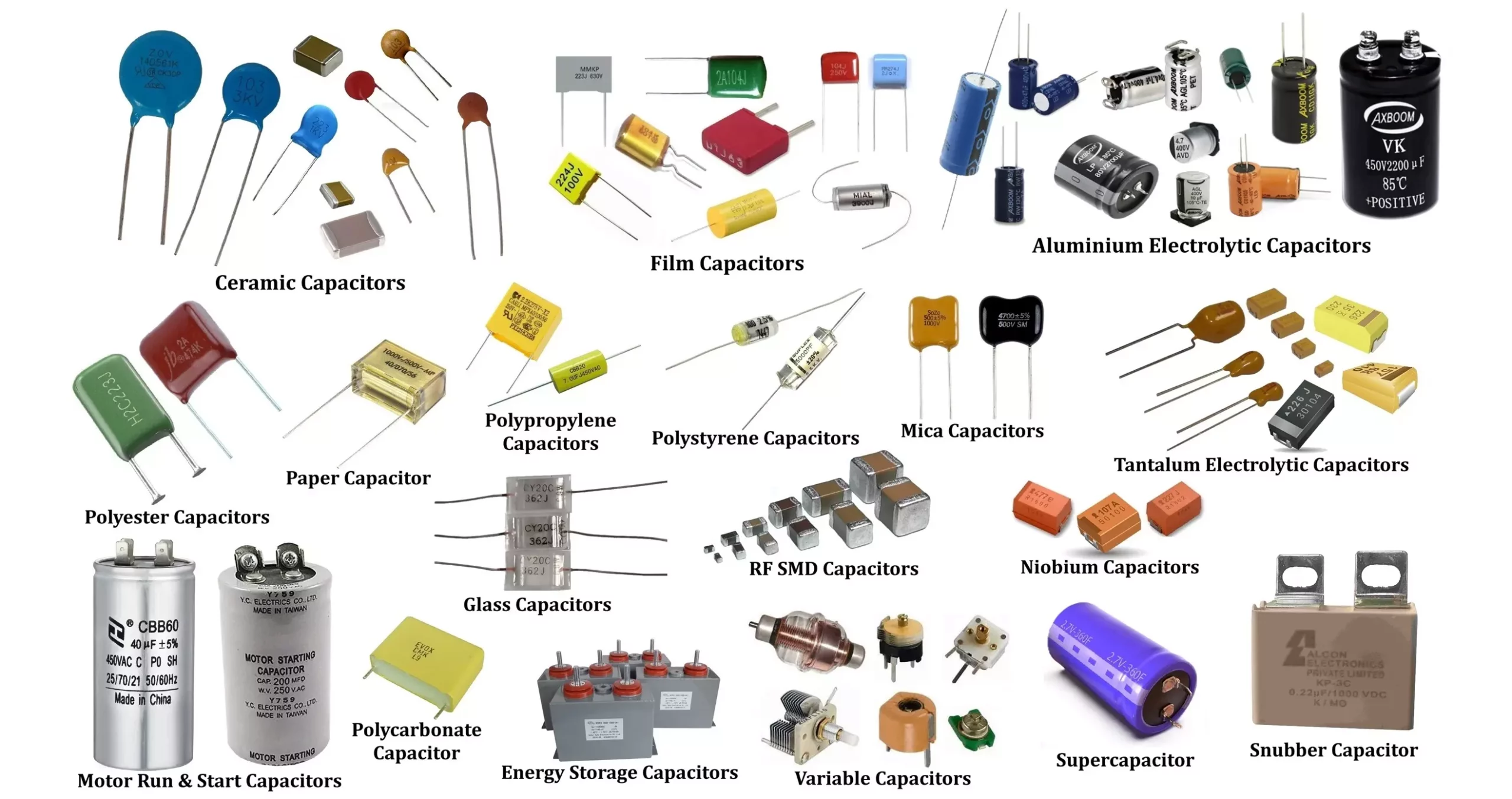
Key Specifications
Typical values used in this course:
- 10nF (0.01µF) – small signal filtering
- 100nF (0.1µF) – decoupling (most important)
- 100µF – bulk energy storage
Types:
- Ceramic (10nF, 100nF)
- Electrolytic (100µF)
How It Works
A capacitor stores charge:
\[
Q = C \cdot V
\]
Where:
- Q = charge (Coulombs)
- C = capacitance (Farads)
- V = voltage
Basic Behavior
- Blocks DC (after charging)
- Passes AC (depending on frequency)
- Reacts to voltage changes
Charging and Discharging (RC Circuit)
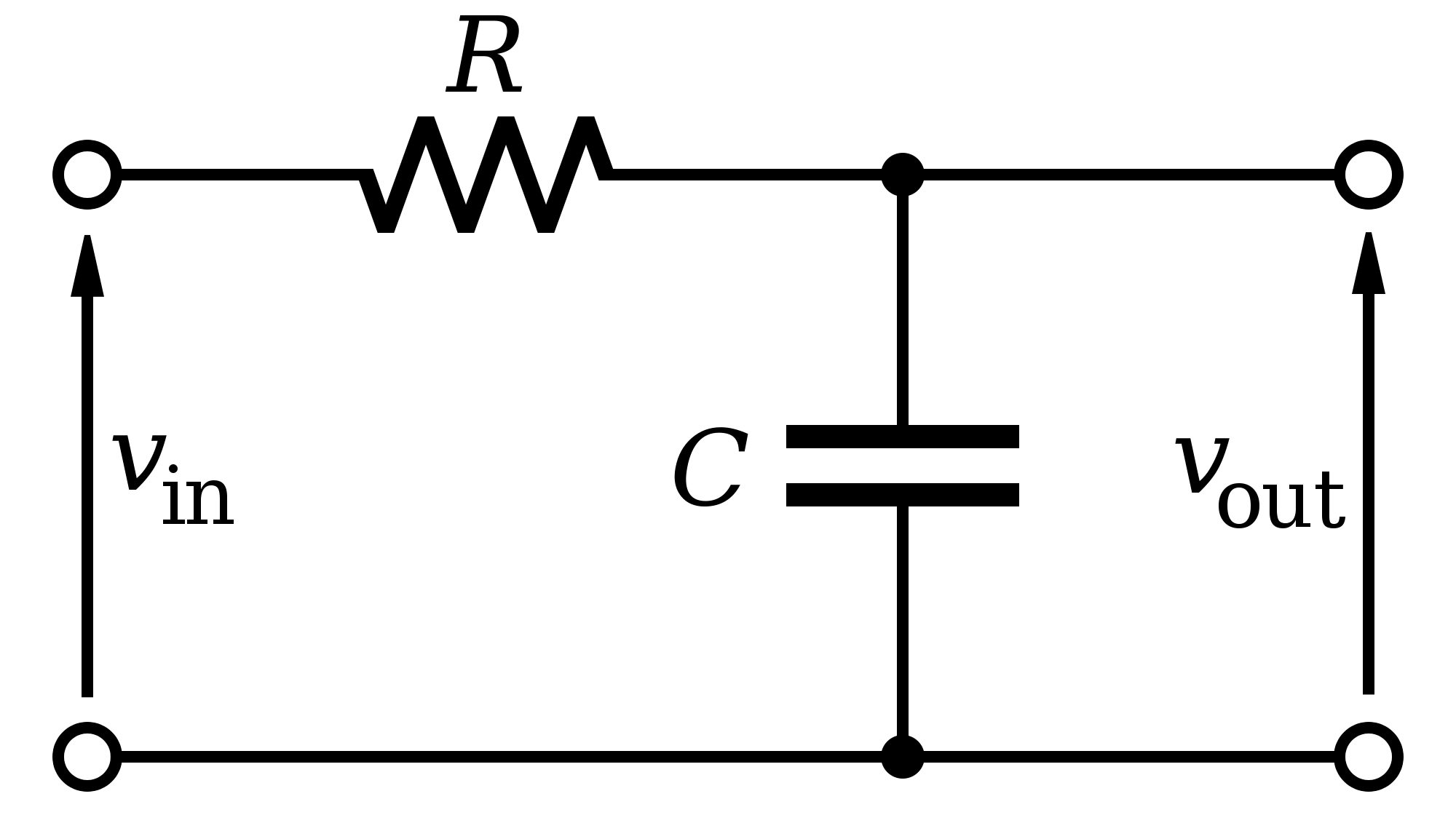
Voltage over time:
\[
V(t) = V_{cc} \cdot \left(1 - e^{-t/RC}\right)
\]
Time Constant
\[
\tau = R \cdot C
\]
- After 1τ → ~63% charged
- After 5τ → ~99% charged
Typical Use of Values in This Course
| Value | Use Case |
|---|---|
| 10nF | High-frequency noise filtering |
| 100nF | Power supply decoupling |
| 100µF | Bulk smoothing, power stabilization |
Decoupling Capacitor (Very Important)
Used near MCU power pins:
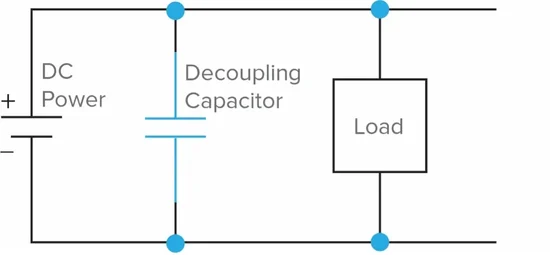
Purpose:
- Remove high-frequency noise
- Stabilize voltage
- Prevent MCU resets
Bulk Capacitor
Placed on power rail:
- Example: 100µF
- Smooths voltage dips
- Supports sudden current spikes
Capacitor Polarity
Ceramic Capacitors (10nF, 100nF)
- Non-polarized
- Can be connected in any direction
Electrolytic Capacitors (100µF)
- Polarized
- Markings:
- Long leg → +
- Stripe → −
⚠ Wrong polarity can destroy the capacitor
Frequency Behavior
Capacitor impedance:
\[
X_C = \frac{1}{2\pi f C}
\]
- High frequency → low impedance
- Low frequency → high impedance
Typical Use in This Course
- Power supply stabilization (100nF)
- ADC noise filtering
- Button debounce (RC)
- Signal smoothing
- Timing experiments
Common Student Mistakes
- Forgetting decoupling capacitors
- Wrong polarity (electrolytic)
- Using wrong value
- Placing capacitor too far from MCU
- Expecting capacitor to behave like resistor
Advantages
- Simple and cheap
- Essential for stable circuits
- Works across many applications
Limitations
- Limited energy storage
- Value tolerance can vary
- Electrolytic capacitors age over time
Summary
Capacitors are essential passive components:
- Store and release energy
- Filter noise
- Stabilize voltage
- Enable timing behavior (RC circuits)
The most important takeaway:
- Always use 100nF decoupling near MCU