Solder CYNEL Sn60Pb40-SW26/2.5% 1.0mm - Solder Wire
Overview
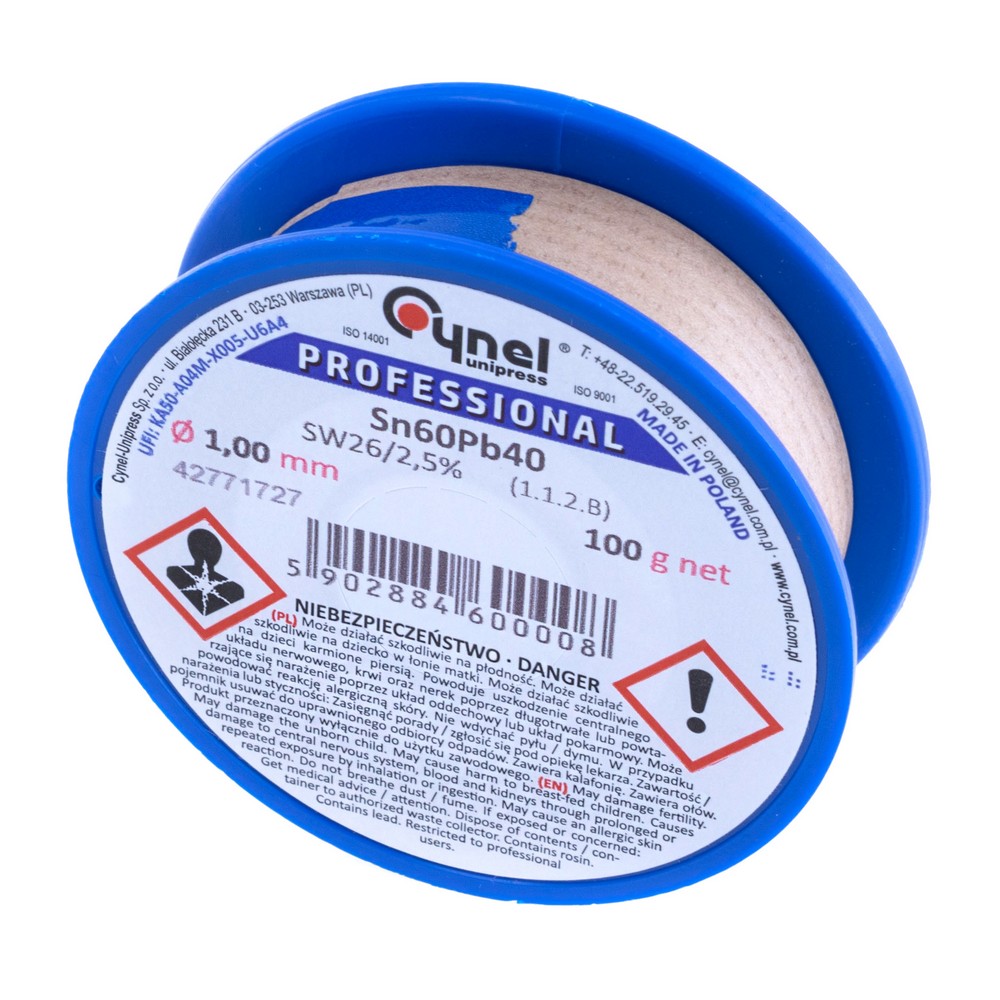
CYNEL Sn60Pb40-SW26/2.5% 1.0mm solder is a leaded solder wire used to make electrical and mechanical connections between components and PCB pads.
It melts at a lower temperature than lead-free solder, which makes it easier for students to learn soldering.
In this course it is used for:
- Pin headers
- Through-hole components
- Wires and connectors
- Basic repair work
Image
Key Specifications
- Type: solder wire with flux core
- Alloy: Sn60Pb40
- Tin content: 60%
- Lead content: 40%
- Flux type: SW26
- Flux content: 2.5%
- Diameter: 1.0mm
- Typical soldering temperature: 300 - 350 degrees C
⚠ This solder contains lead. Use ventilation, avoid eating during soldering, and wash hands with soap after use.
What It Is Used For
Solder is used to create a conductive joint between metal surfaces.
Typical tasks:
- Connecting header pins to modules
- Joining wires
- Repairing broken solder joints
- Tinning wire ends
- Adding solder to pads before assembly
How to Use
- Heat the pad and component lead with the soldering iron.
- Feed solder into the heated joint.
- Use only enough solder to cover the pad and lead.
- Remove the solder wire first.
- Remove the iron second.
- Hold the joint still until it cools.
The solder should flow around the metal surfaces. It should not sit as a round ball on top of the pad.
Important Notes / Safety
- Contains lead; wash hands after handling.
- Use fume extraction or ventilation.
- Do not touch solder wire to your face or food.
- Do not use excessive solder.
- Keep solder wire clean and dry.
- Avoid breathing fumes from flux.
- Store solder away from heat and contamination.
Typical Use in This Course
- Soldering headers to boards
- Fixing poor solder joints
- Practicing correct solder amount
Common Student Mistakes
- Adding too much solder
- Melting solder on the iron tip only
- Not heating both the pad and pin
- Creating solder bridges between nearby pins
- Moving the joint while it cools
- Forgetting that leaded solder requires hygiene precautions
Advantages
- Easier to use than lead-free solder
- Good wetting on clean pads
- Lower working temperature
- Built-in flux helps solder flow
- Suitable for beginner soldering practice
Limitations
- Contains lead
- Not suitable for lead-free production requirements
- Flux fumes require ventilation
- 1.0mm diameter can be too thick for very fine SMD work
- Still needs extra flux for difficult joints
Summary
CYNEL Sn60Pb40 solder is used to create reliable electrical joints:
- Heat the joint before feeding solder
- Use a controlled amount
- Keep the solder and surfaces clean
- Work with ventilation
- Wash hands after using leaded solder