ESP32-S3 N16R8 – Development Board
Overview
The ESP32-S3 N16R8 is the primary development board used in this course.
It is based on the ESP32-S3 microcontroller and provides:
- WiFi + Bluetooth LE
- Multiple GPIO interfaces
- ADC / PWM / UART / I2C / SPI
- Native USB support
In this course it is used to practice:
- Embedded C development (ESP-IDF)
- Peripheral drivers
- FreeRTOS
- State machines
- Communication protocols
Image
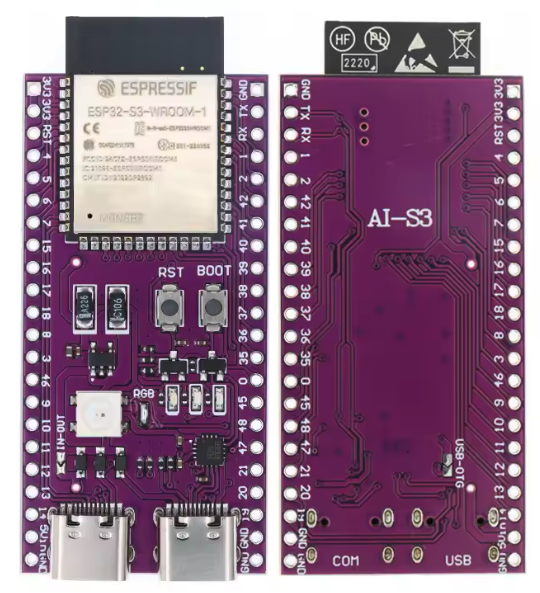
Key Specifications
- MCU: ESP32-S3 (Xtensa dual-core)
- Flash: 16 MB
- PSRAM: 8 MB
- Logic level: 3.3V
- WiFi: 2.4 GHz
- Bluetooth LE
- USB Type-C
⚠ All GPIO operate at 3.3V logic.
Important Electrical Limits
- Maximum GPIO voltage: 3.3V
- Recommended max current per GPIO: ~20 mA
- Total current across all GPIO must be limited
- Never power motors directly from GPIO
Always use common ground between modules.
Commonly Used Peripherals in Course
| Peripheral | Notes |
|---|---|
| GPIO | Digital input/output |
| ADC | Analog sensor reading |
| PWM (LEDC) | Servo / motor control |
| I2C | Sensors, OLED |
| SPI | Displays, sensors |
| UART | Debugging / external MCU |
| Timers | Periodic tasks |
| Interrupts | Encoder, button |
Pinout
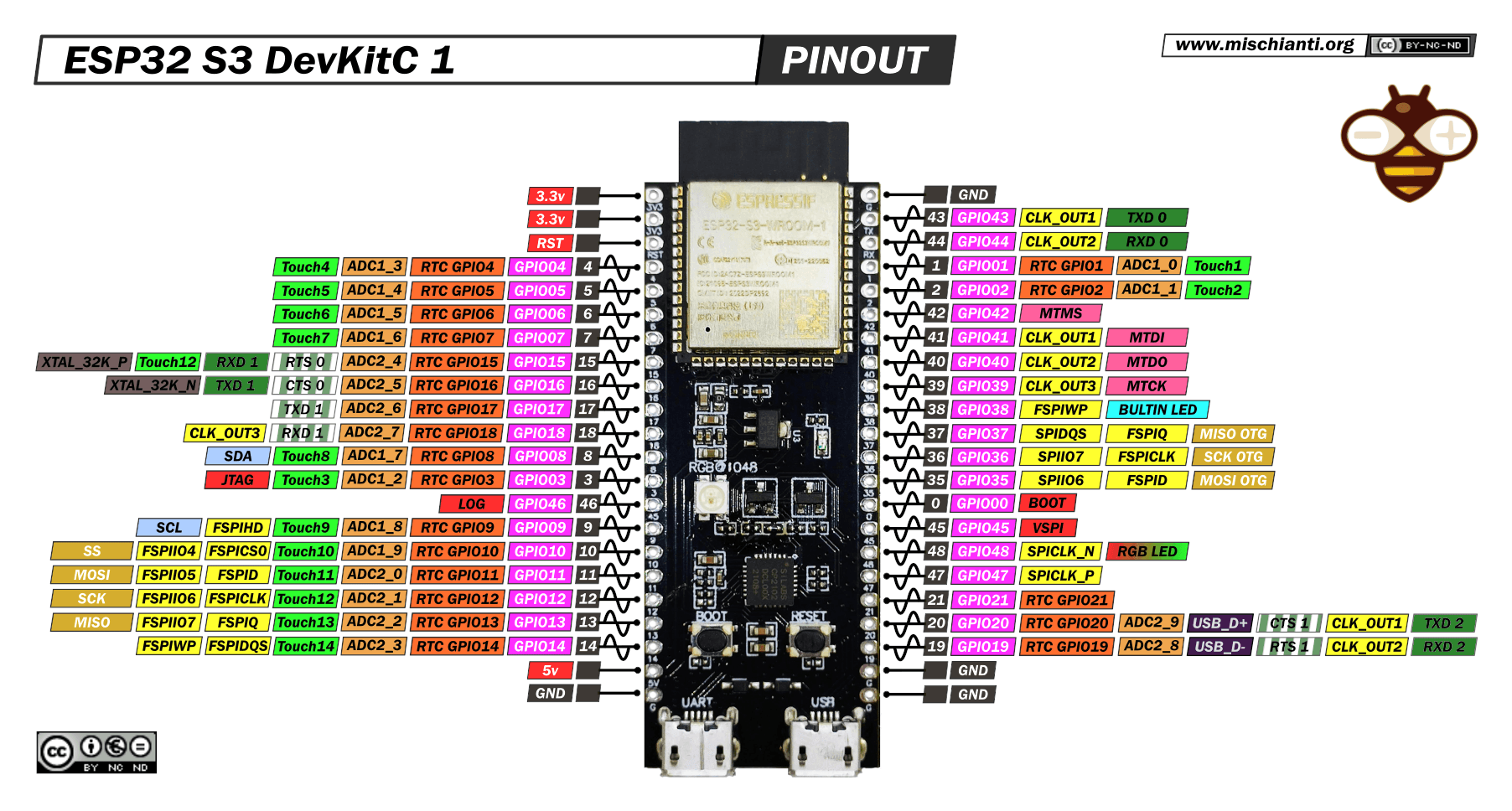
Important Pins
⚠ Pin mapping depends on board revision.
Typical usage:
- I2C: Any GPIO (software configurable)
- UART0: Used by USB for flashing and logging
- ADC: Check ESP32-S3 ADC capable pins
- PWM: Most GPIO support LEDC
Avoid using:
- Boot configuration pins incorrectly
- Strapping pins without understanding their function
Power Options
- USB Type-C (5V input)
- 5V pin (if provided)
- 3.3V regulated output available on board
⚠ Do not feed external 5V into GPIO pins.
Boot Modes
Board enters bootloader mode when:
- BOOT button pressed during reset
Used for:
- Flashing firmware
- Recovery
Common Student Mistakes
- Applying 5V to GPIO
- Forgetting common ground
- Powering servo directly from board 3.3V rail
- Using wrong serial port
- Using GPIO reserved for flash or USB
Typical Use in This Course
- I2C communication with BME280 and SSD1306
- UART communication with STM32
- PWM control of SG90 servo
- Reading analog sensors (LDR, NTC)
- Interrupt handling for encoder
- Non-blocking superloop architecture
- FreeRTOS task-based design
Documentation
Summary
The ESP32-S3 N16R8 is a powerful 3.3V microcontroller board suitable for:
- Real embedded system development
- Communication protocol practice
- RTOS-based projects
- Sensor and actuator integration